
Can Neighbours Fly Drones Over Your Home in Malaysia?
Wondering if your neighbour can legally fly a drone over your compound? Discover your legal rights, privacy laws, and CAAM regulations in Malaysia.
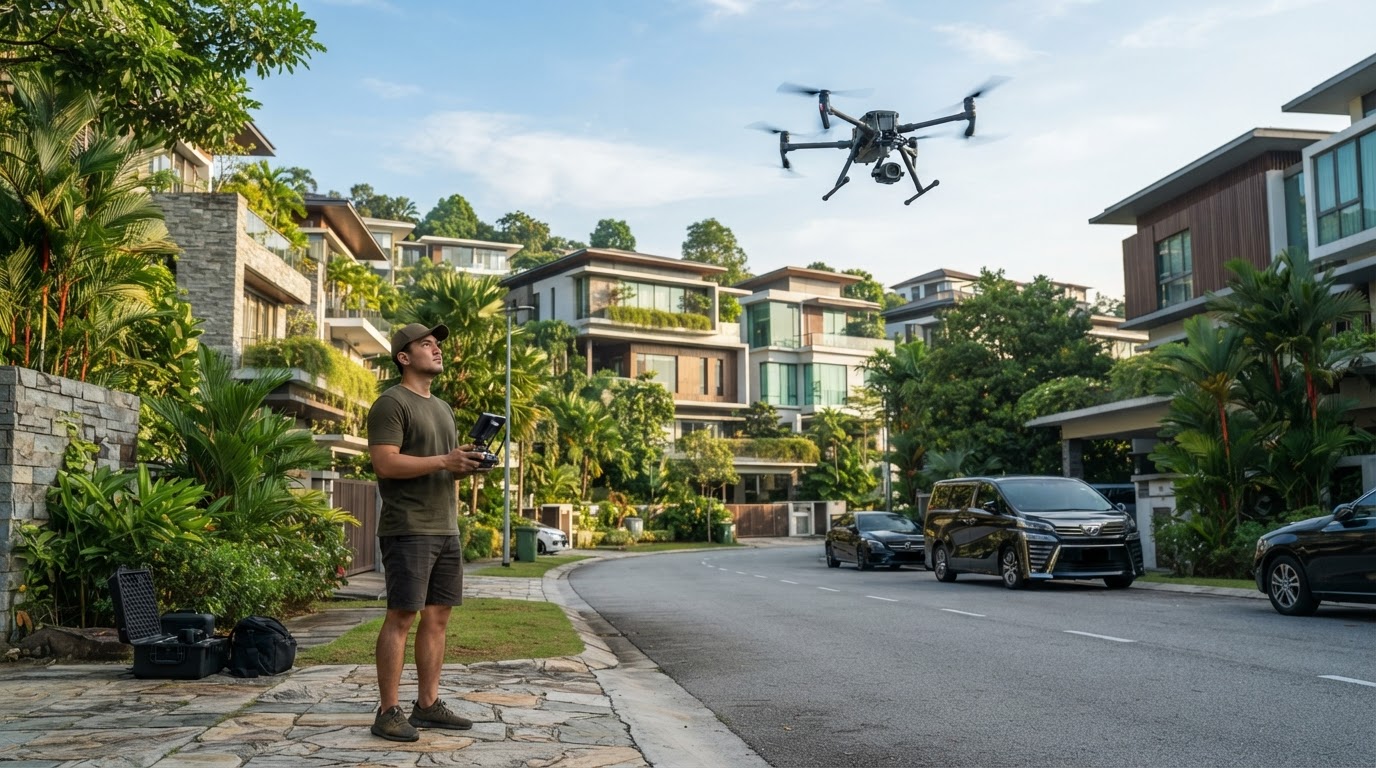
Few sounds disrupt a quiet Sunday morning in a Malaysian residential neighbourhood quite like the high-pitched whine of an unmanned aerial vehicle (UAV). Whether you live in a landed terrace in Petaling Jaya or a high-rise condominium in Penang, watching an unfamiliar quadcopter hover near your windows inevitably prompts urgent questions about safety and personal space. Understanding drone privacy laws malaysia is vital for both homeowners seeking quiet enjoyment and hobbyists eager to avoid criminal or civil liability.
From a professional pilot's vantage point, the question of "can drone fly over my house malaysia?" is neither purely an aviation issue nor solely a privacy concern. Instead, it sits at the complex crossroads of the Civil Aviation Authority of Malaysia (CAAM) safety directives, common-law torts of trespass and nuisance, and statutory penal provisions.
What CAAM Drone Regulations Say About Residential Flying
Under the Civil Aviation Regulations 2016 (MCAR 2016), civil aviation falls strictly under the purview of CAAM. CAAM sets clear operational boundaries for small unmanned aircraft systems (UAS). Even if an operator is flying recreationally without commercial intent, they are bound by statutory flight safety limitations.
Under standard caam drone regulations residential flying encounters significant legal hurdles. First and foremost, Regulation 140 explicitly states that a person in charge of a small unmanned aircraft system shall not cause or permit any article or animal to be dropped from that aircraft, nor operate it recklessly or negligently so as to endanger persons or property.
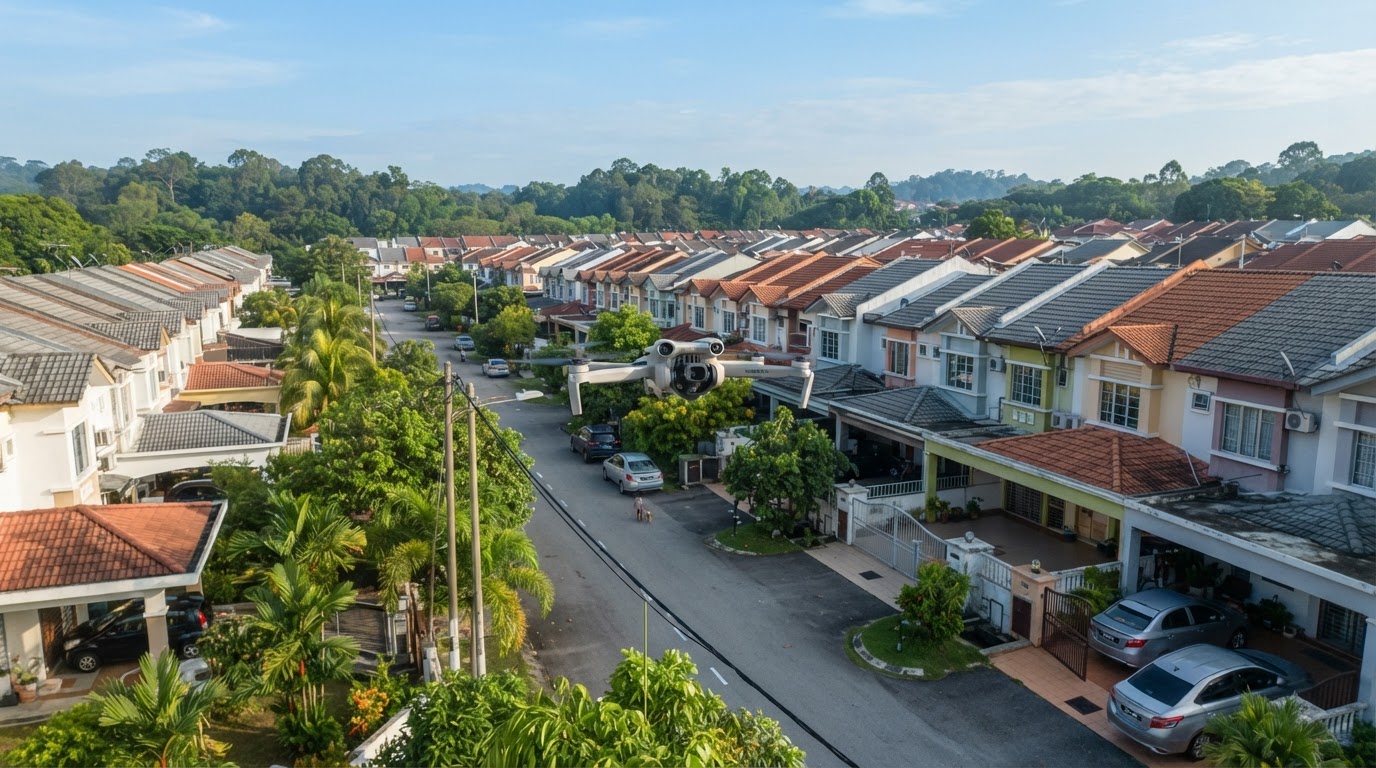
Furthermore, standard operating limits stipulate that small unmanned aircraft must: Maintain visual line of sight (VLOS) with the remote pilot at all times without artificial visual aids. Never exceed an altitude of 400 feet (approximately 122 metres) above ground level. Avoid controlled airspace, aerodrome traffic zones, and designated security sensitive locations. Maintain a minimum lateral separation distance from uninvolved persons, vehicles, vessels, and structures (standard safety guidelines typically mandate keeping 50 metres clear of uninvolved individuals or congested residential zones unless specifically authorised).
If a neighbour launches a drone from their porch and hovers it 10 metres directly above your fenced compound or swimming pool, they are almost certainly violating basic CAAM proximity and safety parameters by operating too close to uninvolved persons and structures.
Do Homeowners Own the Airspace Above Their Roof?
To determine whether a neighbour is trespassing, Malaysian civil law relies on common-law jurisprudence. Historically, land ownership was guided by the Latin maxim cuius est solum, eius est usque ad coelum et ad inferos ("whoever owns the soil, it is theirs up to heaven and down to hell"). Modern courts have long rejected this absolute claim.
In modern Malaysian jurisprudence, an owner's rights to the airspace above their land are limited to such height as is necessary for the ordinary use and enjoyment of the land and the structures upon it.
- Transient high-altitude transit: An aircraft or drone passing through airspace at several hundred feet high on an active heading usually does not constitute an actionable trespass.
- Low-altitude hovering: A drone hovering persistently 5 to 15 metres above your garden, back patio, or bedroom windows interferes directly with your ordinary use and enjoyment. This constitutes private nuisance and potentially civil trespass to land.
If the drone is equipped with a camera capturing identifiable imagery of your family within the curtilage of your private residence, the issue shifts from simple airspace encroachment to civil harassment and breach of privacy.
Privacy Torts, the Penal Code, and Surveillance Concerns
Malaysia does not possess an omnibus statutory "Right to Privacy Act." While the Personal Data Protection Act 2010 (PDPA) strictly governs how commercial entities collect and handle personal data, Section 3(1) of the PDPA explicitly excludes personal, family, or household activities. Consequently, the PDPA rarely applies to a nosy neighbour flying a drone for recreational kicks.
However, this does not mean residents are powerless. Other legal instruments exist:
1. Section 509 of the Penal Code
Under Section 509 of the Penal Code (Act 574), anyone who intentionally insults the modesty of any person by intruding upon their privacy—such as aiming a camera into private bedrooms, bathrooms, or enclosed yards—faces criminal charges carrying imprisonment, a fine, or both.
2. Minor Offences Act 1955
Section 14 of the Minor Offences Act penalises insulting, indecent, or threatening behaviour intended or likely to cause a breach of the peace, providing grounds for police intervention when repeated low-altitude buzzing intimidates residents.
3. Aerial Mapping and Surveying Restrictions
Capturing systematic aerial imagery requires proper clearing. Commercial-grade mapping and photogrammetry or high-resolution aerial media production mandates formal clearances from both CAAM and the Department of Survey and Mapping Malaysia (JUPEM). Unauthorised systematic filming of private property violates basic survey regulations.
| Flight Type | Allowed Altitude | Proximity to Uninvolved Homes | Typical Required Clearances |
|---|---|---|---|
| Casual Hobby Flight | Up to 400 ft AGL | Must maintain safe distance (50m+) | CAAM compliance, VLOS only |
| Condo / Gated Estate | Below roofline / varies | Governed by JMB / MC house rules | Estate Management approval |
| Commercial Inspection | Approved profile | Close proximity permitted with consent | CAAM flight permit, JUPEM clearance |
| Survey & Mapping | Mission-specific | Pre-planned grid patterns | JUPEM permit, CAAM permit, CGSO |
Practical Steps: Handling a Drone Complaint in Malaysia
If an unknown drone is hovering obtrusively over your residence, resist the urge to take destructive measures. Shooting, throwing projectiles, or attempting to jam the drone using unauthorised radio frequency jammers is illegal under MCMC regulations and the Penal Code for damaging private property.
Instead, take measured, evidence-based steps when lodging a drone complaint malaysia police:
- Document the incident: Record the drone using your smartphone. Note the date, exact time, flight path, physical description of the aircraft (size, colour, rotor count), and how long it hovered.
- Locate the pilot safely: Most consumer drones have a practical operational radius of under 1 to 2 kilometres in urban signal environments. The operator is almost certainly standing on an adjacent street, open playground, or nearby condominium balcony.
- Initiate neighbourly dialogue: Often, a casual flyer is simply testing a new unit without realising that their camera angle faces into a private living room. A polite reminder is frequently sufficient to resolve the issue.
- Report to your Joint Management Body (JMB) or Rukun Tetangga (RT): Gated communities and high-rise developments often have statutory by-laws prohibiting unauthorised drone flights from common property grounds.
- Lodge a formal police report: If the flight involves clear peeping, harassment, or persistent targeting of your private space, file a report at the nearest Balai Polis citing potential offences under Section 509 or the Minor Offences Act. Submit a formal notification to CAAM’s Flight Operations division with your police report copy.
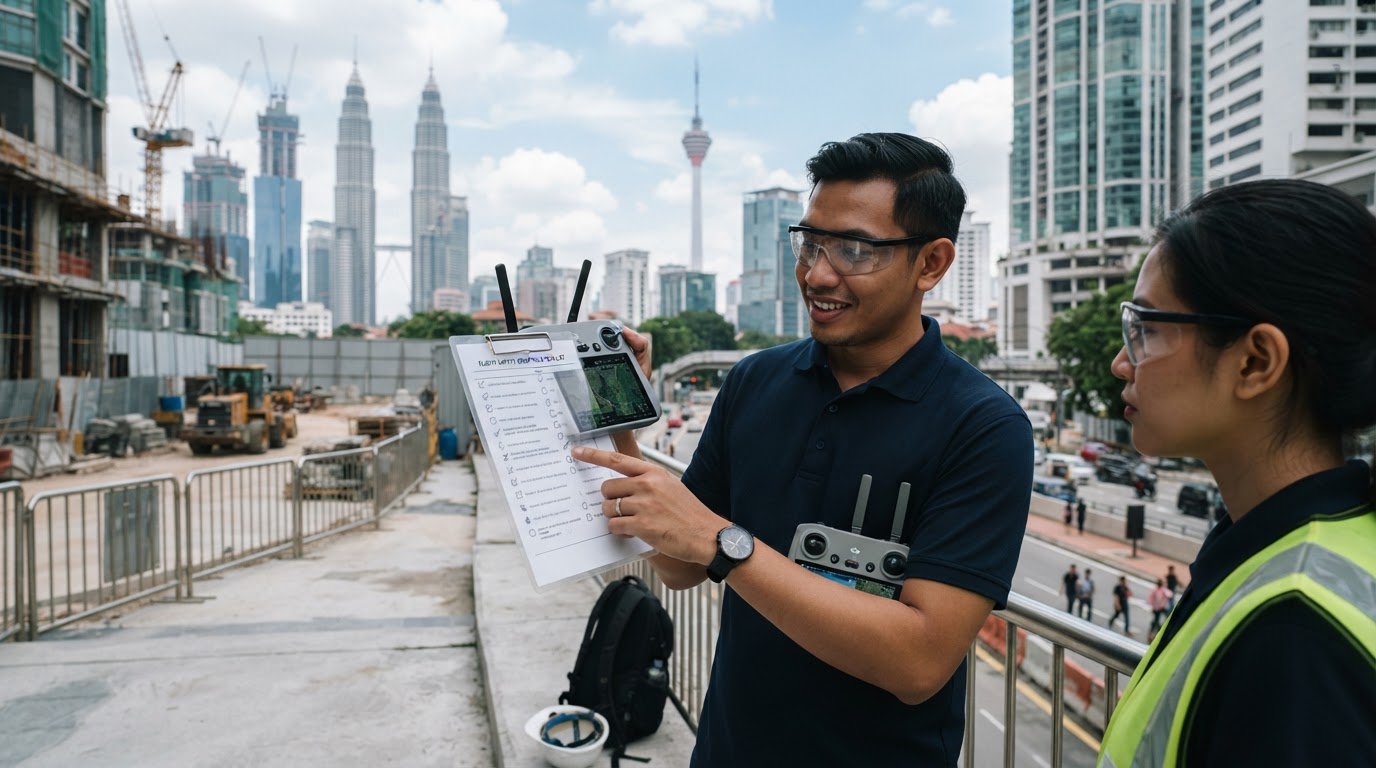
Professional operations conducted by licensed crew—such as industrial inspection of high-tension cables or structural assessments in construction and infrastructure—are carried out after securing permits and notifying area stakeholders in advance. Commercial missions follow strict flight limits detailed in our CAAM and JUPEM permit guide.
Understanding Drone Privacy Laws in Malaysia for Safe Operations
Navigating drone privacy laws malaysia requires common sense, technological awareness, and mutual respect. While Malaysian airspace is legally managed by CAAM rather than individual property owners, an operator does not possess unfettered freedom to treat residential compounds as private playgrounds. Low-altitude hovering, targeted surveillance, and reckless operations that endanger residents cross both civil nuisance boundaries and statutory penal limits.
Whether you need certified aerial operators for compliant mapping projects in Selangor or want to ensure your site survey complies with every national safety directive, hiring accredited personnel is the safest path. Browse verified drone pilots who understand privacy frameworks, or post a drone job on DronePilot to ensure your next aerial operation meets strict regulatory standards.
Frequently Asked Questions (FAQ)
Can I legally destroy or knock down a drone flying over my house?
No. Damaging or knocking down a drone can lead to criminal charges under the Penal Code for mischief and intentional property damage. It may also lead to civil claims from the owner.
Can condominiums ban drones within their compound in Malaysia?
Yes. A Joint Management Body (JMB) or Management Corporation (MC) can introduce and enforce house rules under the Strata Management Act 2013 that prohibit the takeoff, landing, and operation of drones within common property.
What should I do if a drone is recording inside my bedroom or bathroom?
Record video evidence of the drone's position, note the time, and immediately lodge a police report at your nearest Balai Polis for voyeurism and insult to modesty under Section 509 of the Penal Code.
Are commercial drone pilots exempt from residential privacy rules?
No. Professional pilots must obtain specific CAAM flight approvals and JUPEM aerial photography permits. They are also expected to provide advance notice to local residents or property management before flying over private compounds.